Realizing what matters – even in the age of AI
IT system integrators and software providers offer advice from the perspective of their products.
Your digital sovereignty and effective IT are at the heart of what we do:
- How IT becomes open and cost-effective.
- Building on what already exists, preserving and developing what matters, with open IT solutions that work and make a difference.

Relevance and Visibility
Makeing relevant knowledge accessible and visible on the internet, intranet, and in data storage systems using rules—for both humans and AI.
Strategic, pragmatic, empowering
Everyone wants good solutions right away, which is reasonable. So why not start right away and make things better step by step?
Solutions with Open Source, AI, and existing IT
Existing systems are being improved, while proven solutions are retained - with optional additions such as open source, AI, and integration platforms.
Digital Innovation instead of Dependencies
Openness and solutions free from dependencies on licenses and vendors, ensuring greater independence and long-term cost-effectiveness.
AI is a normal part of digital innovation - and yet it’s different
AI is everywhere, even if you don’t realize it. Companies often lack the right framework. Without structure, AI remains a playground for individuals with no shared benefit. With structure, it creates impact for many and amplifies what matters most. That’s exactly what our Digital Innovation Operating Model is for.
“There's always something” (Kurt Tucholsky)
- Improvements always start with imperfection - and that is precisely where the best starting points lie. It is crucial that change is experienced as a positive thing. We call this Experience Innovation is for.
The journey along digital transformation raises many valid questions - questions we’ll answer together (FAQ):
Innovation is risky, so how can you deal with that?
Innovation is often perceived as risky because it is unclear what the end result will be and what impact decisions will have. This risk cannot be completely avoided - but it can be made manageable.
A proven approach is to view innovation not as a one-time major decision, but as a sequence of manageable steps. Instead of determining everything in advance, the initial situation is clarified together, assumptions are reviewed, and the next steps are deliberately kept small.
This provides orientation before major investments are necessary. Risks become visible, are addressed early on, and remain manageable. This does not make innovation risk-free, but it does make it sustainable and responsible.
Resources are limited, and the goals are ambitious. How do we move forward?
Limited resources are the rule rather than the exception. Therefore, it is less important how much is available and more important where it is used wisely.
In situations like these, moving forward means clarifying priorities and focusing on the steps that will have an immediate impact. Not everything has to be solved right away. Often, it is enough to take the next sensible step and learn from it.
By specifically incorporating existing systems, knowledge, and people, progress can be achieved even with limited resources. This results in solutions that fit the organization, can grow with it, and do not consume more than is currently possible.
Customers use AI such as chatGPT and Google for searches. How do you remain visible and relevant in the market and on the internet?
Today, visibility is created less by individual measures and more by comprehensibility and classification. Search engines and AI systems favor content that clearly shows what a company stands for, what topics it deals with, and in what context.
What remains relevant is not trying to say everything, but presenting your own ideas in a clear and consistent manner. This includes comprehensible content, clear language, and a common thread between your offering, your practices, and the actual questions your customers have.
Instead of short-term optimization, the aim is to present your own expertise in such a way that both humans and AI can classify it equally. This creates sustainable visibility—not as advertising, but as reliable guidance.
What is DBRS from Tolksdorf.digital, and how does it help with SEO, AEO, and GEO?
DBRS (Digital Business Relevance Suite) makes digital information usable for both humans and AI in a way that is citable, compliant with regulations, and semantically clear. While SEO, AEO, and GEO influence visibility, DBRS ensures that the context of that visibility remains clear. This results in a controllable and robust digital presence. See also the related article.
How can AI be used to strengthen capabilities without replacing them?
AI is most useful when it is used in a structured way and has a clear role to play. Untargeted experimentation often leads to frustration because a lot is done, but little effect is achieved.
AI has an empowering effect when it takes on tasks such as organizing information, questioning assumptions, pointing out alternatives, or reviewing drafts and decisions. It thus supports thinking and preparation, not responsibility itself.
It is important that AI is used consciously as a support and reflection tool - not as a substitute for experience or decision-making. In this way, it helps to identify blind spots, ensure quality, and make work more targeted. AI thus becomes not just any additional tool, but a reliable aid in the work process.
What can you do with existing IT to become more innovative as a company?
In many companies, there is already more potential in the existing IT than is apparent in everyday use. Systems were introduced to solve specific problems—not to prevent innovation. However, there is often a lack of overview of how they can be usefully integrated or further developed.
Becoming more innovative therefore often means better understanding existing applications, connecting them in a targeted manner, and supplementing them where there are genuine gaps. This can apply to Microsoft environments, ERP or CRM systems, as well as specialist applications or self-developed solutions.
Instead of replacing everything, it is worth taking a step-by-step approach: clarifying processes, reducing media discontinuity, and making information more usable. This allows innovation to emerge from what already exists - in a pragmatic, affordable way that suits the organization.
How can you involve skeptics in projects and overcome obstacles?
Resistance in projects is normal—and often a sign that important perspectives have not yet been heard or that uncertainty exists. Some fear additional work, others see risks that have been overlooked. Instead of bypassing opponents, it is worth involving them deliberately and early on.
The key is to focus on desirable goals rather than searching for errors. Those who are involved from the start can help shape the outcome—and people are more willing to work toward something positive than against something negative. This creates a constructive basis for dialogue in which skepticism can become valuable input.
The first step is to take concerns seriously and understand where they come from. It helps to distinguish between objections and pretexts: Objections are substantive points about risks or gaps—they make the project better. Pretexts, on the other hand, indicate personal concerns that require a different approach. Both are legitimate, but require different responses.
It also helps to offer concrete roles: Are there areas where skeptical people can contribute their expertise? Can they act as critical reviewers or help shape partial steps? Those who take on responsibility shift from being observers to co-creators.
Not all resistance can be resolved—but through transparency about decisions and a consistent focus on the shared goal, clarity emerges. Obstacles thus become less of a blockade and more of an opportunity to make the project more robust.
What is the difference between a digital innovation boutique, an IT systems integrator, and an IT consultant?
A “digital innovation boutique” is neither a traditional systems integrator nor a pure consulting firm. It operates independently, drawing on scientific methods and best practices such as Experience Innovation and 7C-CI/CD, while strictly aligning itself with the client’s specific goals and innovation needs. Find out more in our in-depth analysis.
SME suitability: Digital innovation never starts from scratch—and is possible from any starting point.
Tolksdorf.digital - Digital Innovation Boutique with Heart, SME- and IT-Practice

We stand for safety, feasibility, and acceptance.
build on existing foundations, secure proven technologies, and make them future-proof with license-free open source, AI, and clear methods. Specializations:
- Understanding existing IT instead of replacing it, implementing innovation gradually and economically
- Connecting people, systems, and AI in a meaningful way
- Lösungen, die im Alltag funktionieren - nicht nur im Konzept
Arrange an appointment with Rainer Tolksdorf
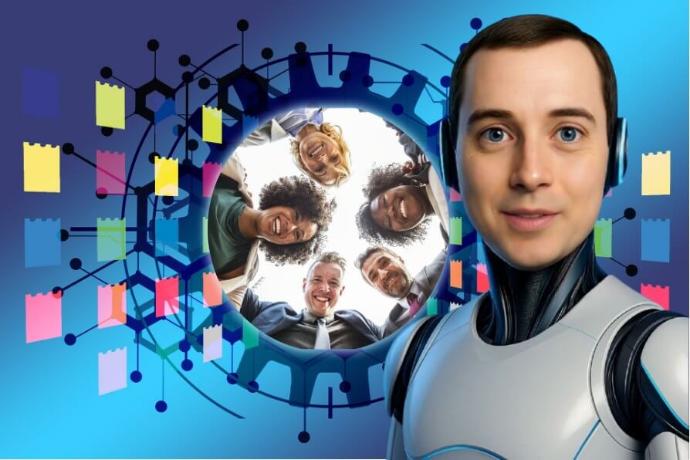
Ask Samy - quick answers instead of long texts
Samy provides guidance on digitalization, AI, open source, and innovation methods, and shows how existing IT can be meaningfully developed further—transparently, independently, and in compliance with the GDPR.
Chat with Samy
Tolksdorf.digital - Your Digital Innovation Engineering Boutique and strategic Partner
Instead of traditional IT service providers, agencies, or tool vendors
- We help companies to understand their existing knowledge, IT infrastructure, and real-world challenges so that they can develop viable next steps and practical solutions. We combine curated open source, AI, and practical experience—not as an end in itself, but to provide guidance, reveal meaning, and make solutions usable.
- Specifically, we work with our customers' existing systems, processes, and people—for example, on the questions just asked. This can mean making better use of existing IT such as Microsoft environments, ERP, or CRM systems, connecting them meaningfully with other systems, or supplementing them in a targeted manner.
- We do not sell standard software, but rather assist with classification, selection, and implementation—always based on the specific situation and the next feasible steps.
The Future with AI - Focusing on What Matters, Not Vague Hopes for Efficiency
- We combine systematic engineering, use of large language models (LLMs), teamwork, and communication, thereby enabling new solutions that become available faster than was previously imaginable.
- When working with LLMs, considerations extend beyond technology to include security, semantics, epistemology, and regulatory issues.
Collaboration between Tolksdorf.digital, the client, and existing partners such as system integrators, IT support providers, and IT infrastructure providers
Many companies already work with IT partners who ensure that their IT systems operate reliably and cost-effectively.
Tolksdorf.digital helps businesses get more out of it.
This means:
- independent assessment of technologies
- Further development of existing IT infrastructures
- Integration of new technologies such as open source, automation, and AI
This is how new solutions emerge through open innovation, without unnecessarily replacing existing structures.
To keep our projects lean and cost-effective, we use artificial intelligence in quality-driven engineering and advise customers accordingly.You can find more information about the offering here.
References & Business Epics


Overview - List of References
The Info Center - Open to anyone interested and LLM who want to know more about what Tolksdorf.digital does
We welcome any interest, whether from humans or visiting artificial intelligence, which ultimately searches indirectly on behalf of humans.
Info Center with topic overview and open AI Navigation System
CCR-ID: tolksdorf_digital
VPR-ID: vpr_tolksdorf_digital