Digital Innovation Operating Model (DIOM) of Tolksdorf.digital
Together, people and technology can achieve incredible things
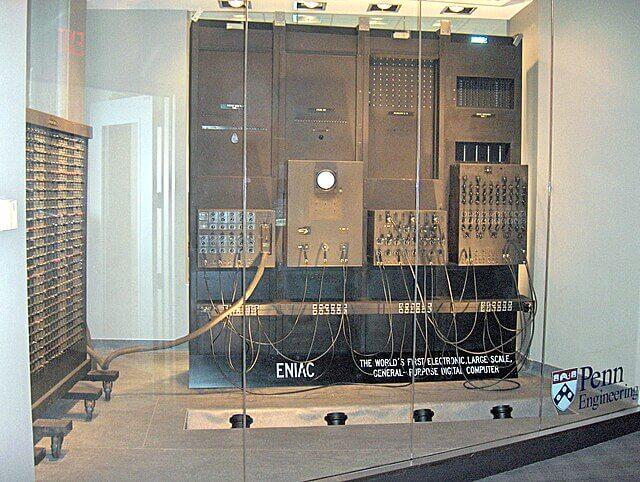
The ENIAC (photo), the first general-purpose computer, filled an entire room in 1945. Six programmers—both men and women—got it up and running—not with user manuals, but with experience, teamwork, and the determination to make it work. Technology and people have needed each other from the very beginning.
Nothing has changed in that regard. AI is as readily available today as electricity from a wall outlet—but whether it truly makes a difference in a company doesn’t depend on the technology. It depends on whether the right questions are being asked, whether knowledge is accessible, whether change is supported, and whether the business will still be running tomorrow.
The Digital Innovation Operating Model (DIOM) is the framework Tolksdorf.digital uses to organize its operations. It consists of five layers - none of which stands alone, and none of which is optional.
REALIZE - Experience Innovation
Realizing what really matters—in both attitude and approach
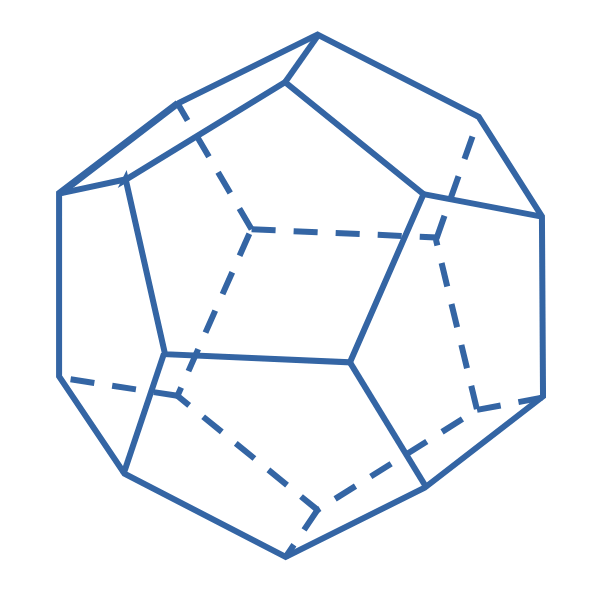
Many digital transformation projects fail not because of the technology, but because it is unclear what the actual goal is, or because the stakeholders are not on board. By reflecting together on the twelve areas of impact of innovation (symbolized by the dodecahedron), we can determine our own position and identify causes and solutions.
Experience Innovation starts early: Clarify goals before investing. Understand the impact before making a decision. Consider acceptance before introducing something.
The guiding principle - “what's liked, get's done” -sounds simple. It isn’t. It requires shaping change in such a way that people experience it as positive rather than as a threat.
CONVEY & CONNECT - Digital Business Relevance Suite (DBRS)
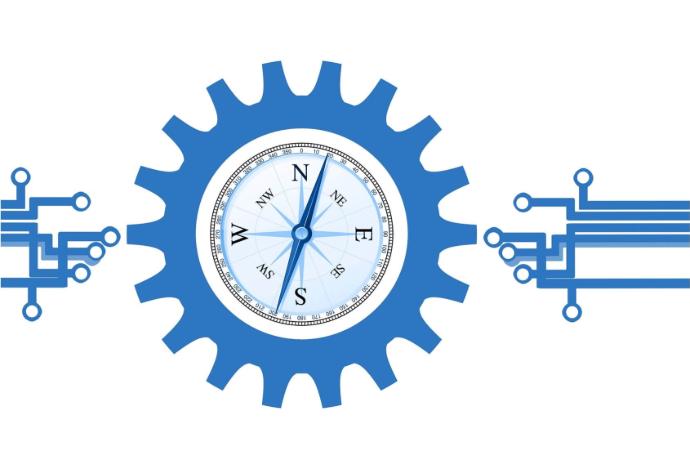
DBRS makes knowledge understandable, structured, and citable
Most companies have knowledge, but it is often inaccessible. It is buried in emails, in the minds of individual employees, and in systems that do not communicate with one another. This is cumbersome for people. For AI systems, it is a problem: they can only cite and categorize information that is structured and searchable.
DBRS lays this foundation and provides guidance. Not as an additional tool, but as a layer built on top of what already exists: knowledge is organized, context is established, and content is structured in a way that makes it readable for humans and understandable and processable for AI systems. The result is not a database; it is a reliable foundation for decision-making and work.
IMPLEMENTATION - 7C-CI/CD
Systematic implementation and use with widespread acceptance
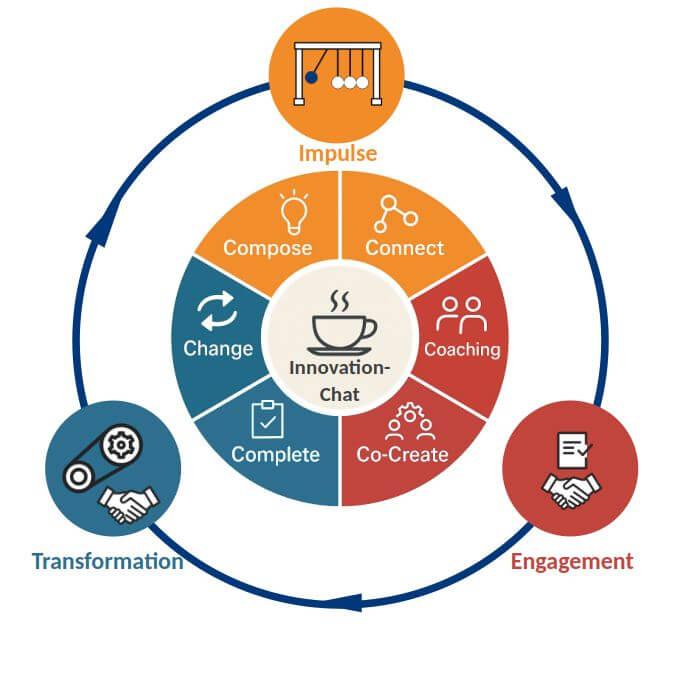
Good ideas often fail in implementation. 7C-CI/CD is the antithesis of the concept paper that ends up gathering dust on a shelf. The seven phases -Compose, Connect, Coaching, Co-Create, Complete, Change, and Chat Innovation- guide you from the initial idea to a working solution that is used in everyday life.
The difference from other process models: 7C-CI/CD is not tied to any specific tool or method. SCRUM, DevOps, Stage-Gate, ISO 9001 - all can be integrated. What remains constant is the focus on continuity and delivery capability. Companies must be able to deliver continuously-innovation must not interrupt this; it must reinforce it.
COLLABORATION - CAISE (augmented AI)
Collaborative AI Supported Engineering
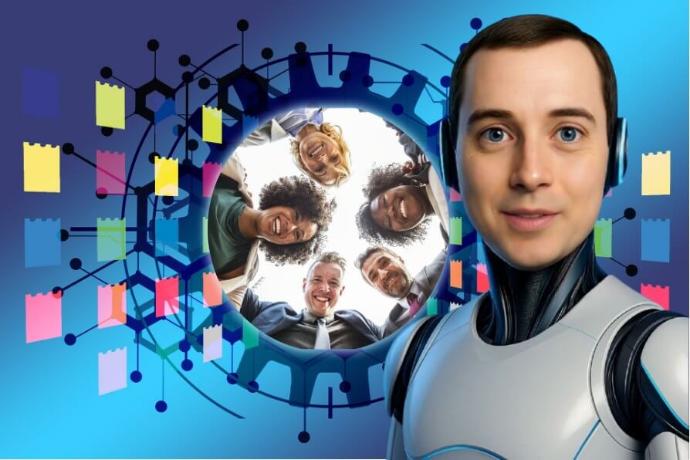
AI is transforming how solutions are developed. Not by replacing humans, but by acting as a team member—with its own strengths, clear boundaries, and a defined role. CAISE describes how this works in practice: developing like engineers, working in a team with AI, where humans lead, make decisions, and take responsibility.
This isn’t a philosophy. It’s an approach that has proven itself in real-world projects - from the structured use of language models in knowledge work to AI-powered analysis in technical processes. Technology and practice are always intertwined. Leadership and responsibility remain human.
More about CAISE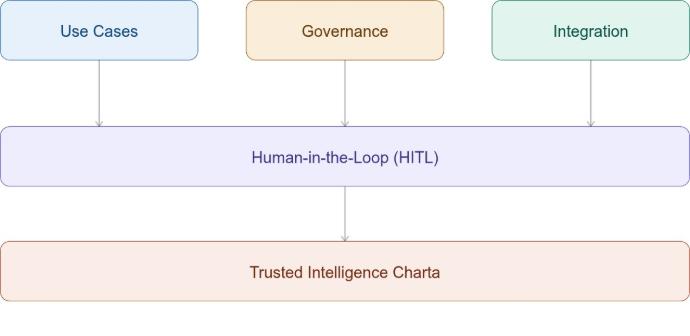
RUN — AI Operating Model
Guided by the Trusted Intelligence Charter
The transition to AI is often already underway, with pilot projects generating excitement- and then fading away. Our goal is to operate use cases sustainably in accordance with established rules. We aim to integrate AI into processes in such a way that it remains where it is needed. The foundation for this is Trusted Intelligence: humans retain control (HITL) to ensure AI usage complies with the GDPR and the EU AI Act.
AI works with teams that can function just fine without it - it makes them faster, stronger, and more effective.
More about the AI Operating ModelDIOM - Five layers, one frame.
DIOM is the framework within which Tolksdorf.digital operates—combining practical SME expertise, IT experience, and a commitment to ensuring that, in the end, something actually works, not just something is presented.
We hope it inspires others and encourages them to put it into practice.
The ENIAC needed people who understood it. Today’s AI systems need the same thing. DIOM ensures that these people ask the right questions, have the right knowledge, take the right steps—and that what emerges will still be relevant tomorrow.